
Syndromic Diagnostic Reasoning in Psychiatry Medical Students Residents Emergency Physicians Psychiatrists Psychologists
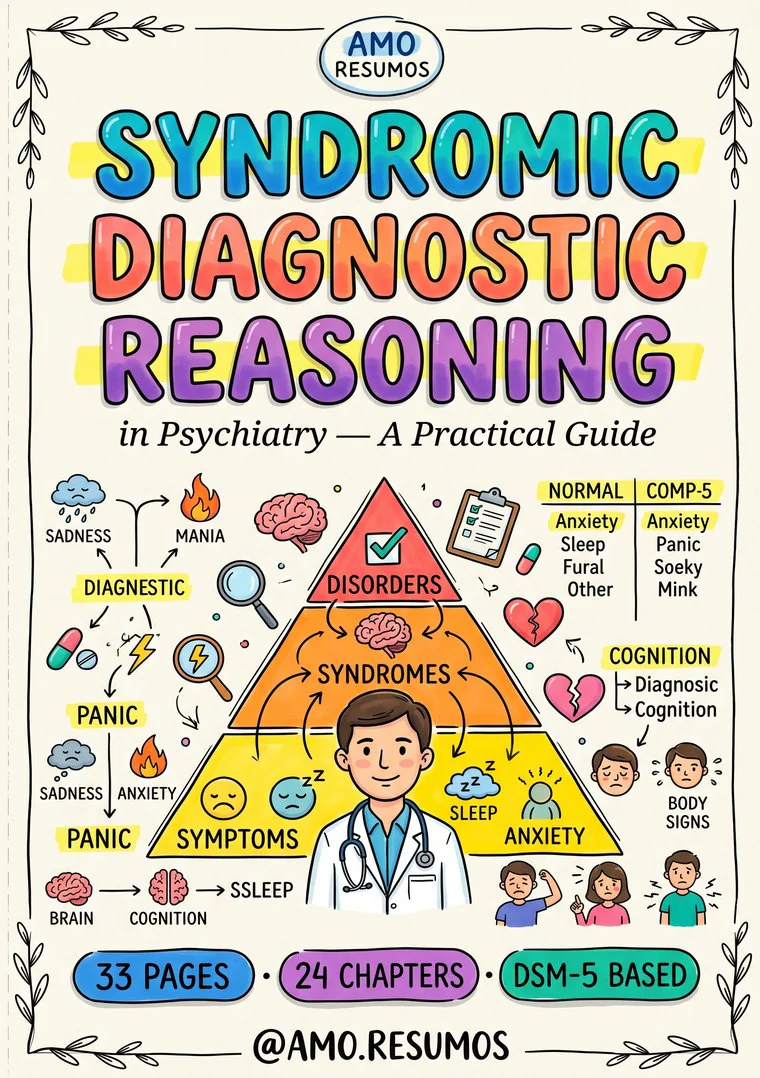
Symptom, then syndrome, then disorder — and never the other way round. 24 illustrated chapters that teach the order that keeps you from naming the wrong diagnosis.
Take a look inside
Real pages from the guide.
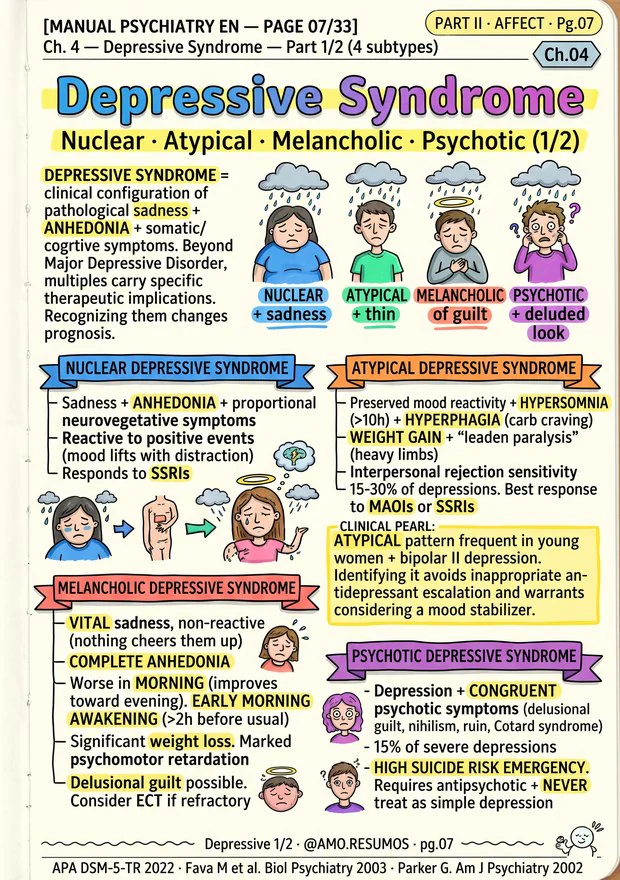
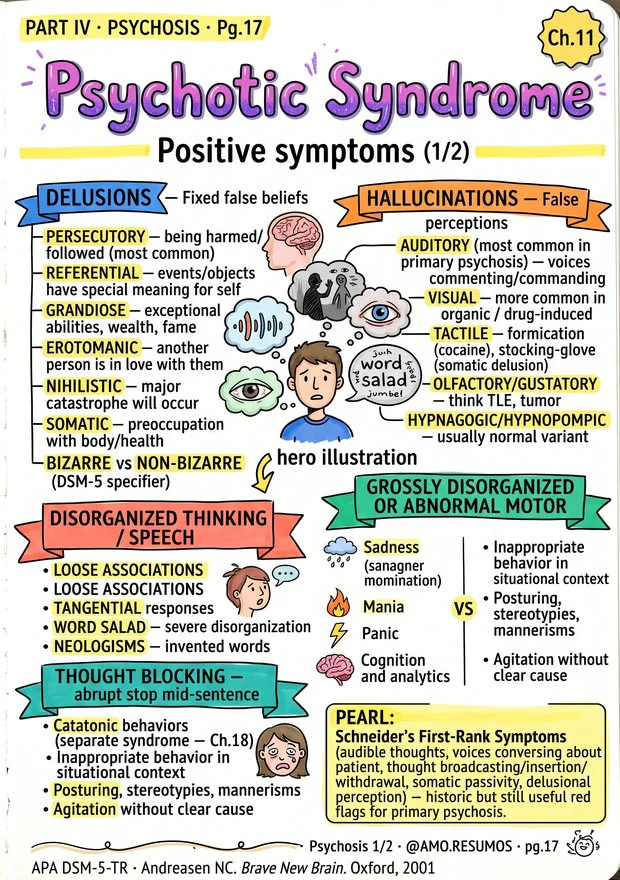
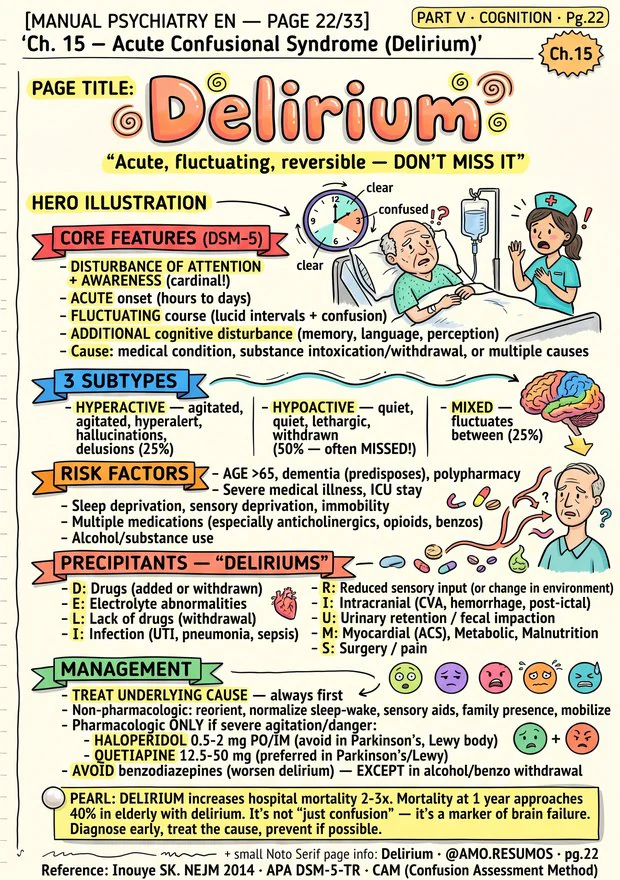
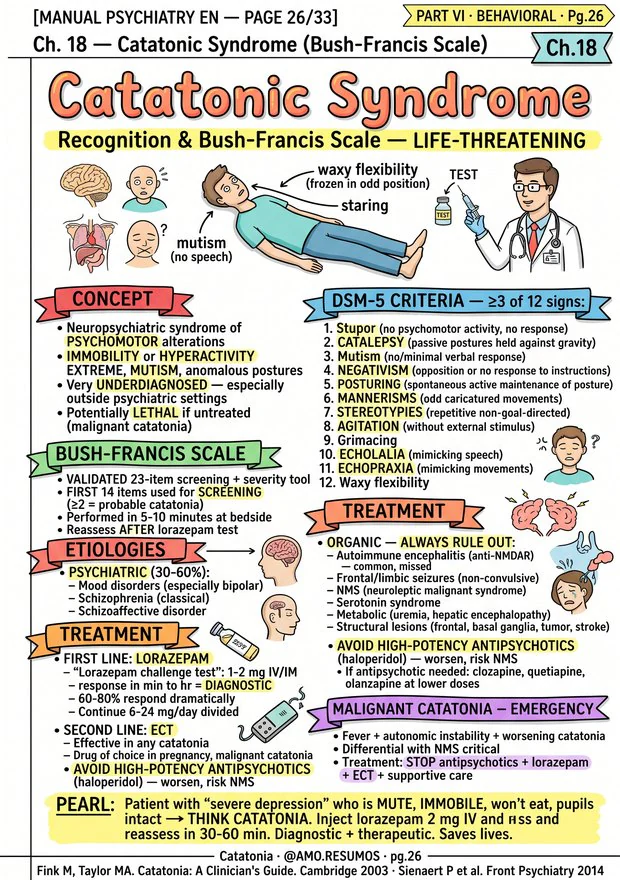
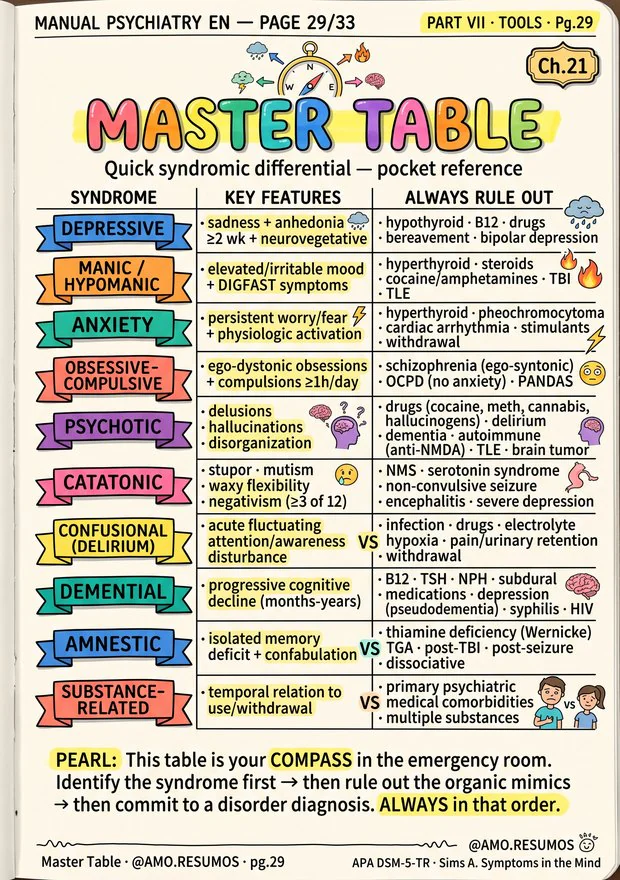
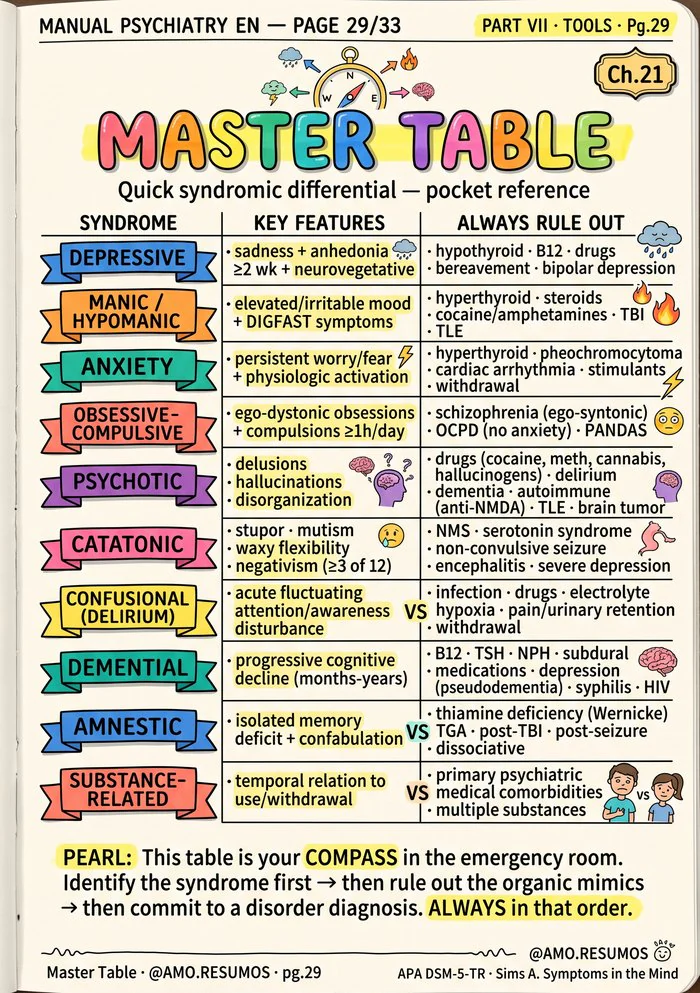
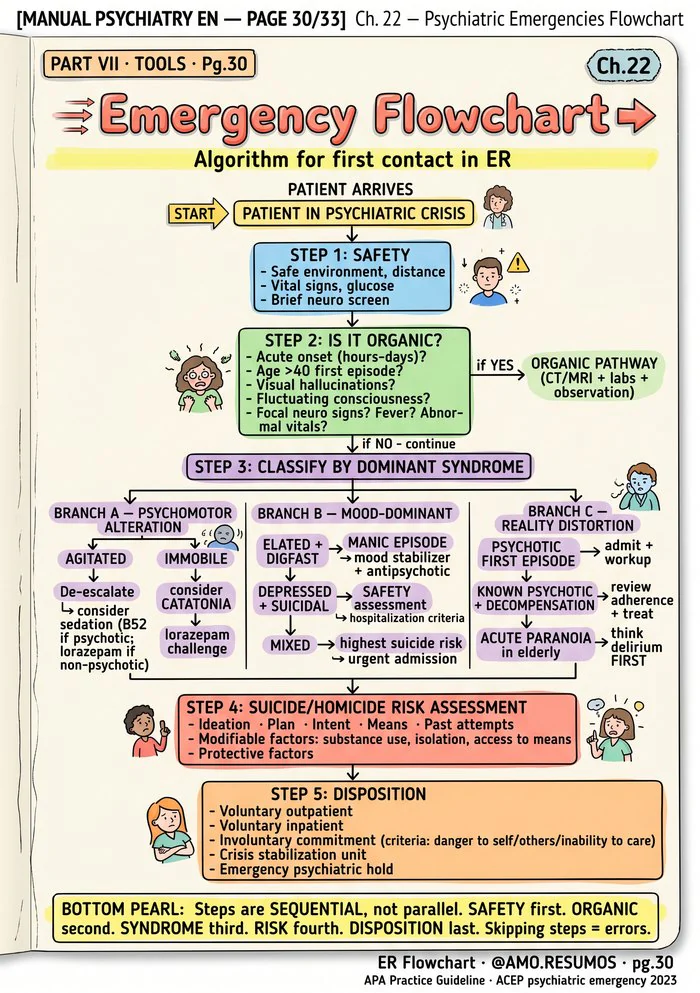
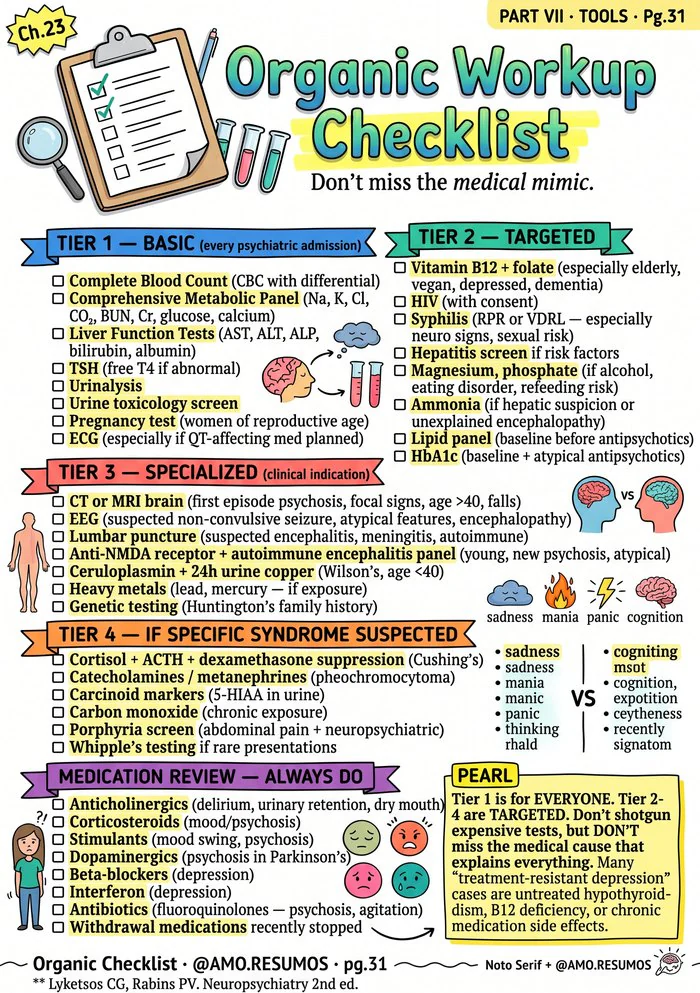
You have the symptoms. Which syndrome is it?
Check the ones you have already lived through:
- Had an agitated patient in the ER and could not tell delirium from a psychotic episode
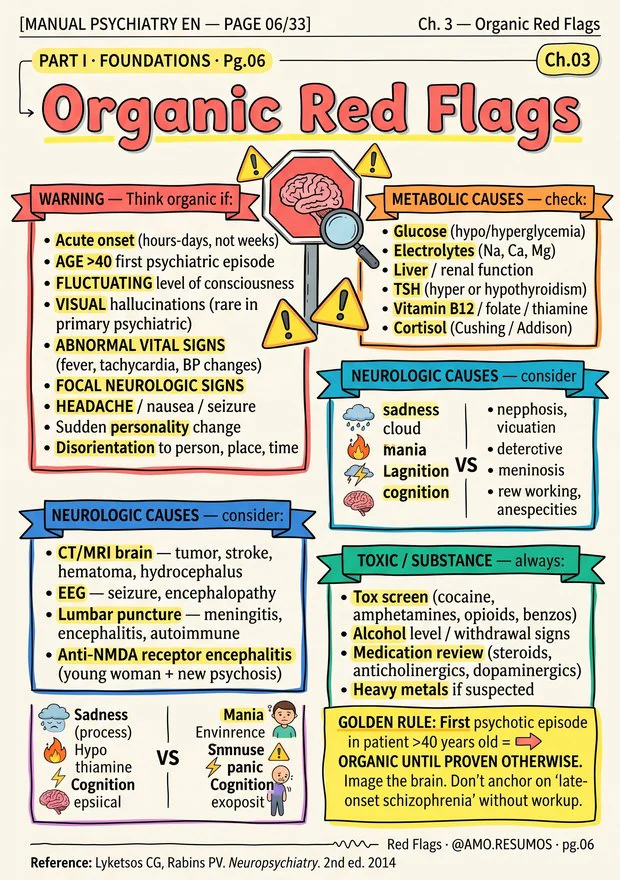
- Saw a first psychotic episode at 55 and did not know how far the organic workup had to go
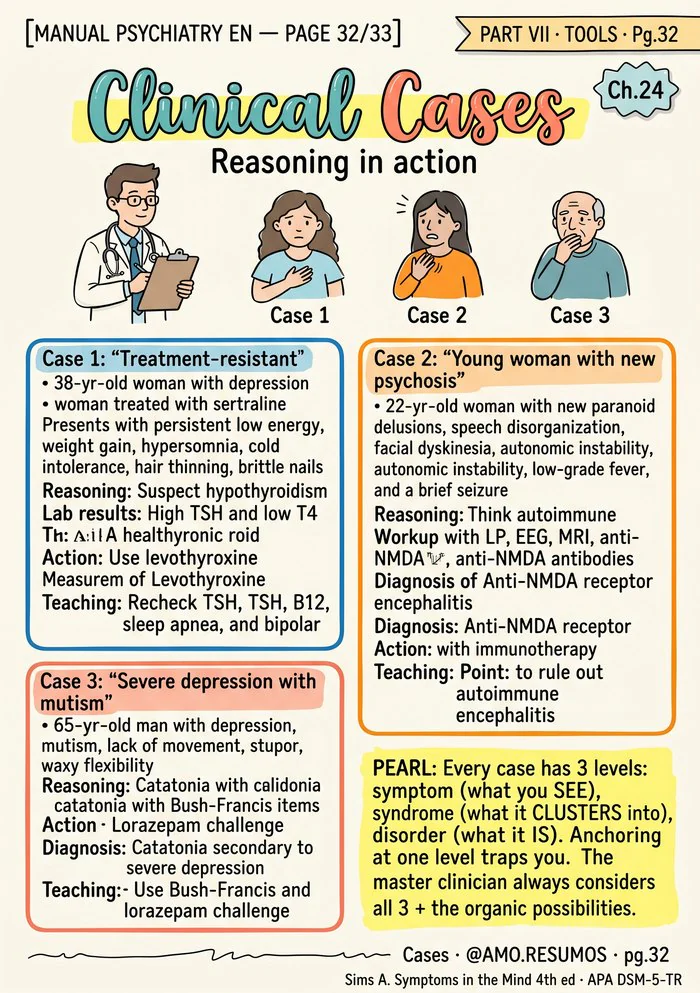
- Called it treatment-resistant depression before anyone had checked the thyroid or the B12
- Had a mute, immobile patient in front of you and only thought of catatonia when someone said it out loud
- Could not draw the line between an obsession, an overvalued idea and a delusion
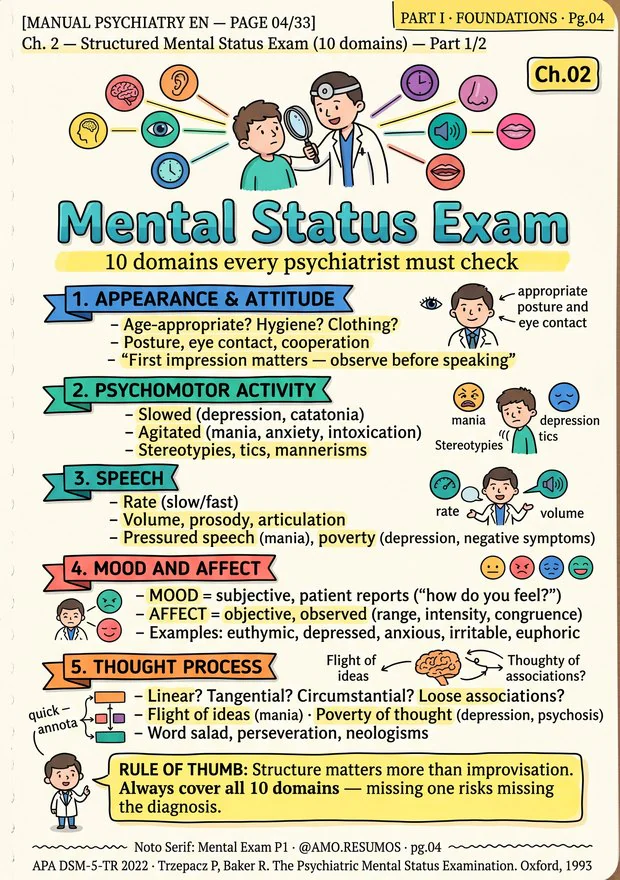
- Knew what you were seeing and still froze on how to write the mental status exam
This guide is for you.
One method, applied to every syndrome
Identify the syndrome first, rule out the organic mimic second, and only then commit to a diagnosis. Always in that order.
Everything you will find inside the guide
Seven parts, 24 chapters, 33 illustrated pages. Click any part to see its chapters.
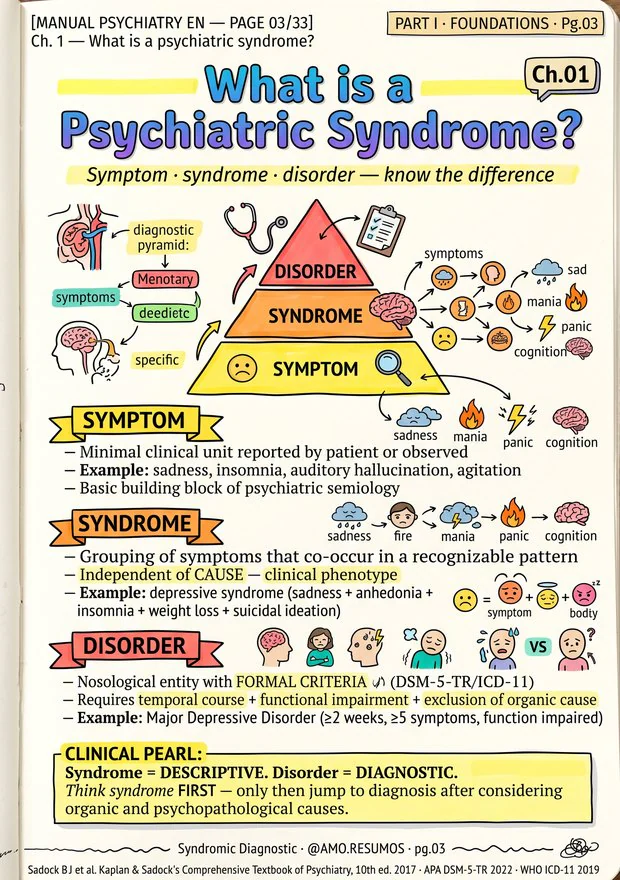
Ch. 1 What is a psychiatric syndrome · Ch. 2 The structured mental status exam, all ten domains · Ch. 3 Organic red flags: when to stop and think medical.
Ch. 4 Depressive syndrome: nuclear, atypical and melancholic · Ch. 5 Manic, hypomanic and mixed · Ch. 6 Dysphoric syndrome and irritability · Ch. 7 The differential of depressed mood.
Ch. 8 Generalized anxiety, panic and phobia · Ch. 9 Obsessive-compulsive syndrome · Ch. 10 Post-traumatic and acute stress syndrome.
Ch. 11 Psychotic syndrome: positive and negative · Ch. 12 The first psychotic episode · Ch. 13 Delusion, overvalued idea and obsession · Ch. 14 Hallucinations: organic against functional.
Ch. 15 Acute confusional syndrome, delirium · Ch. 16 Dementia syndrome: cortical against subcortical · Ch. 17 Amnestic and dissociative syndrome.
Ch. 18 Catatonic syndrome, scored with Bush-Francis · Ch. 19 Psychomotor agitation in the emergency room · Ch. 20 Substances: intoxication against withdrawal.
Ch. 21 The master differential table · Ch. 22 The psychiatric emergencies flowchart · Ch. 23 The organic workup checklist · Ch. 24 Commented clinical cases · and the full bibliography.
Get the Practical Guide
- Immediate access to the guide
- High-resolution PDF
- Read on your phone, tablet or computer
- Print it yourself if you prefer paper
- Lifetime access to the content
- All 24 chapters across 33 illustrated pages
- 7-day guarantee
7-day guarantee
If within 7 days you feel the guide did not help you, we refund 100% of your investment. No questions asked.
Frequently asked questions
It is the habit of moving from symptom to syndrome to disorder, in that order. You group what you observe into a syndrome, rule out the medical and substance-related causes that produce the same picture, and only then commit to a diagnostic label. Chapter 1 sets it out and the remaining 23 apply it.
No. It opens with what a syndrome is and how to run a structured mental status exam, then builds from there. If you have interviewed a patient, you can follow it.
Both. The whole of Part VII is built for the shift: a one-page master differential table, an emergency-room flowchart for first contact, an organic workup checklist in four tiers, and commented cases.
DSM-5-TR. Each chapter carries its reference at the foot of the page and the complete bibliography closes the guide.
As soon as your payment is confirmed, the download link is sent to your email. It is a high-resolution PDF you can read on your phone, tablet or computer, or print yourself.
The digital edition is yours for life. Download it once and use it whenever you need.
You have 7 days after purchase to review the material. If it is not for you, we refund 100% of what you paid, no questions asked.