
The Autism Spectrum Disorder Guide Medical Students Interns Residents Pediatricians General Practitioners
The whole evaluation in your pocket, drawn out page by page. From the red flag to the screen, and from the screen to the referral.
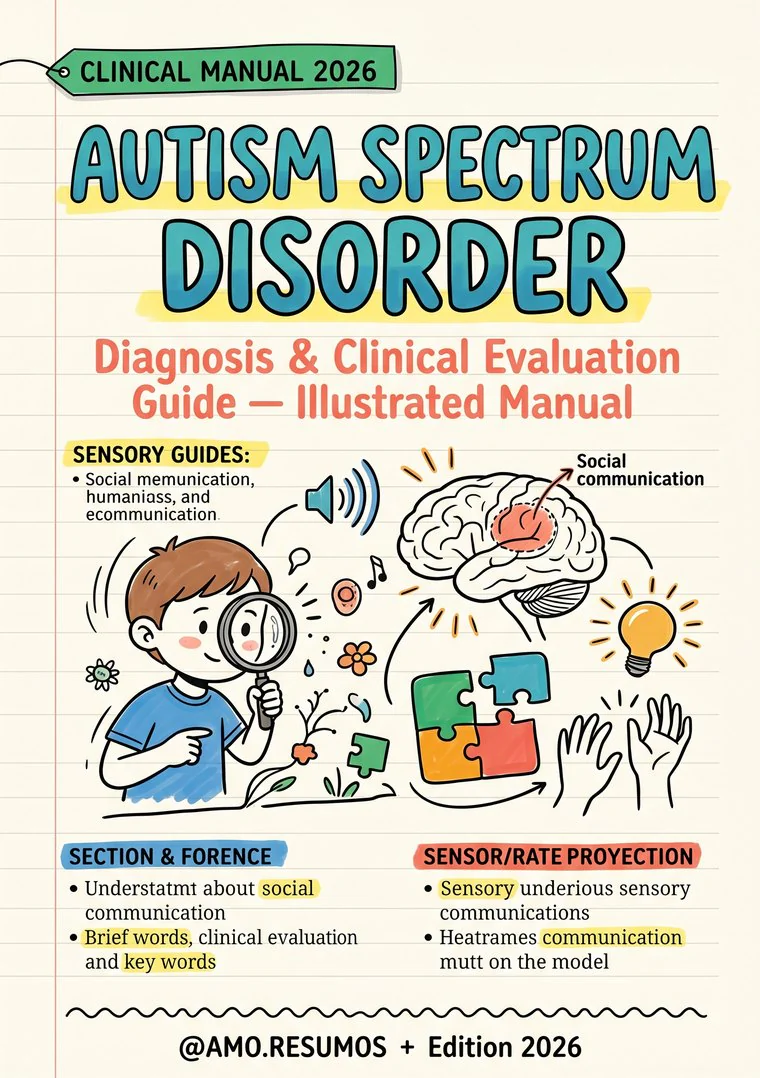
Take a look inside
Real pages from the manual.
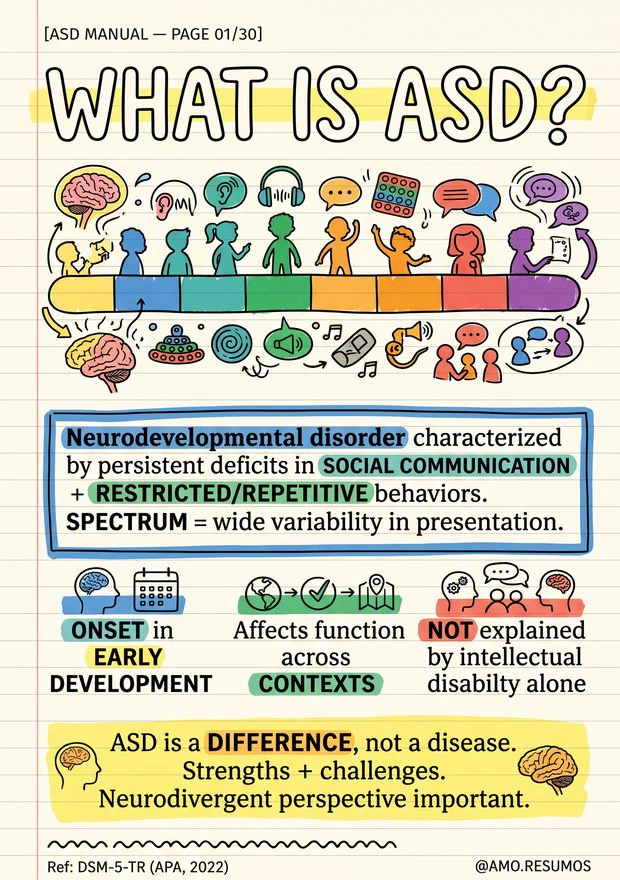
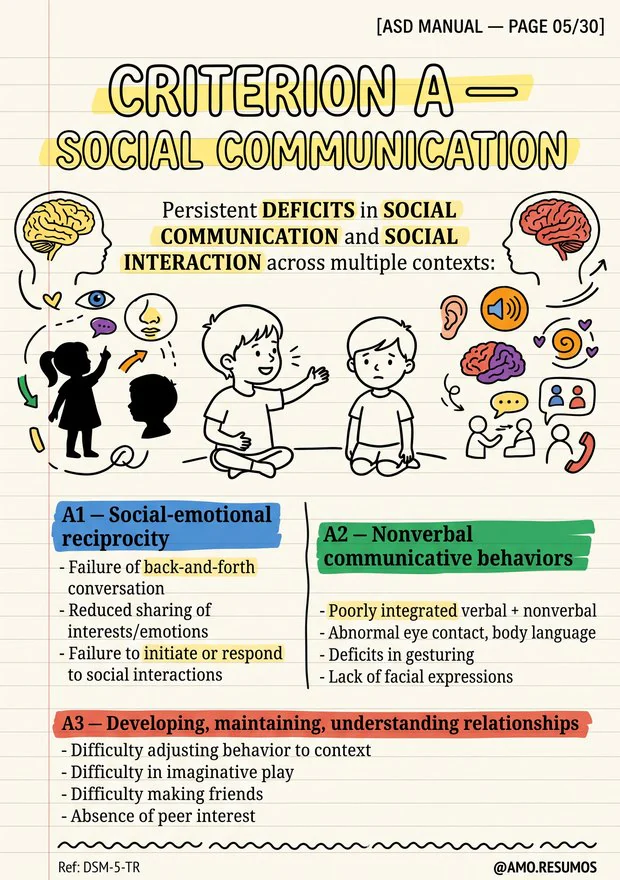
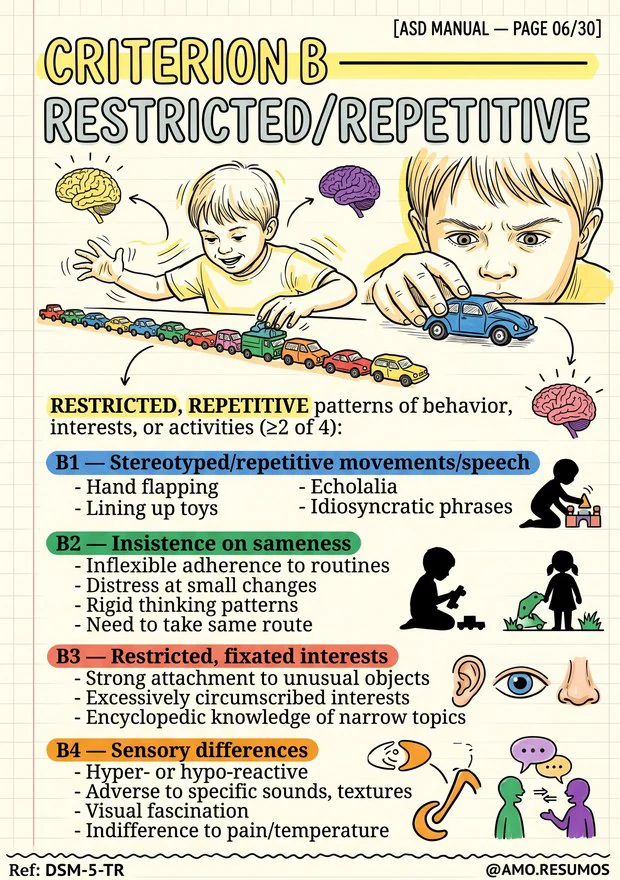
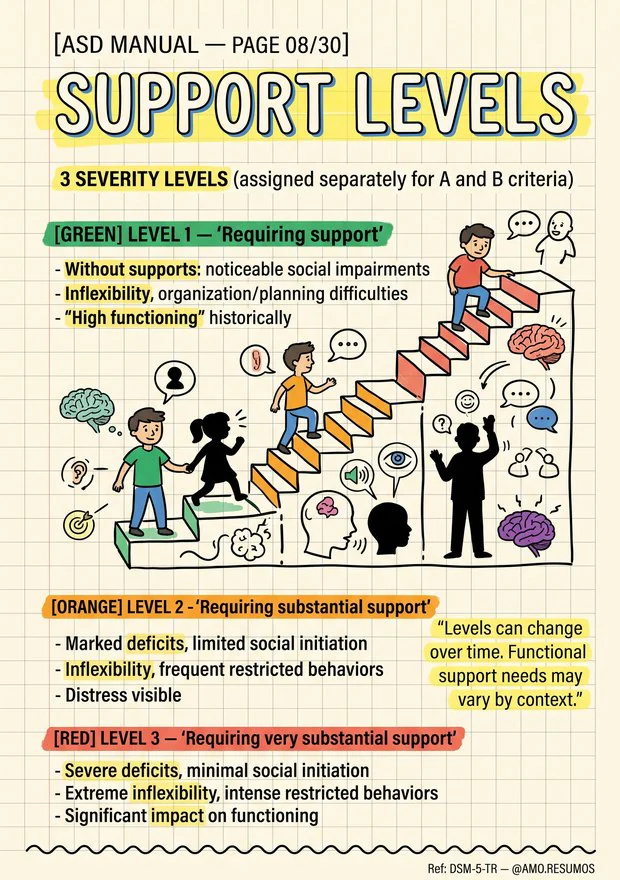
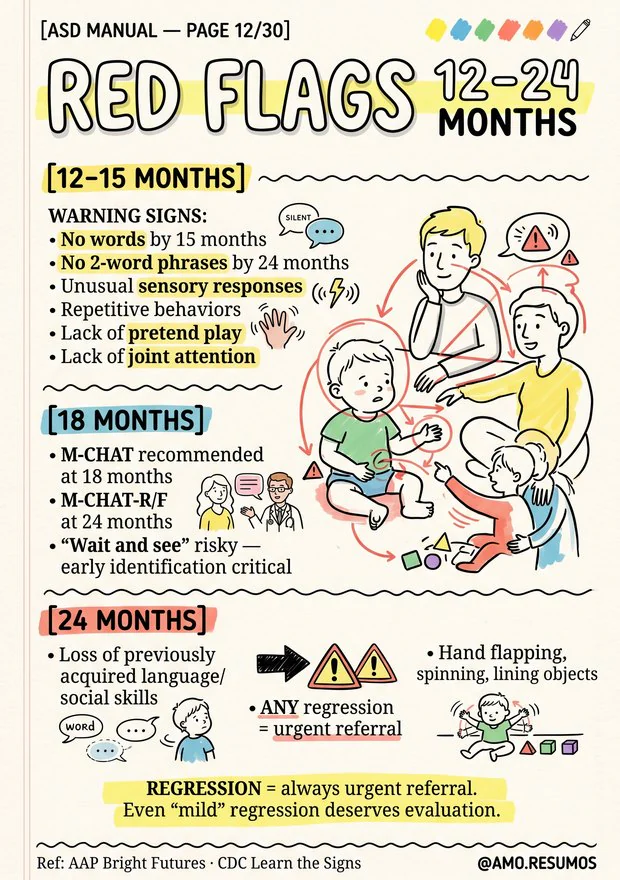
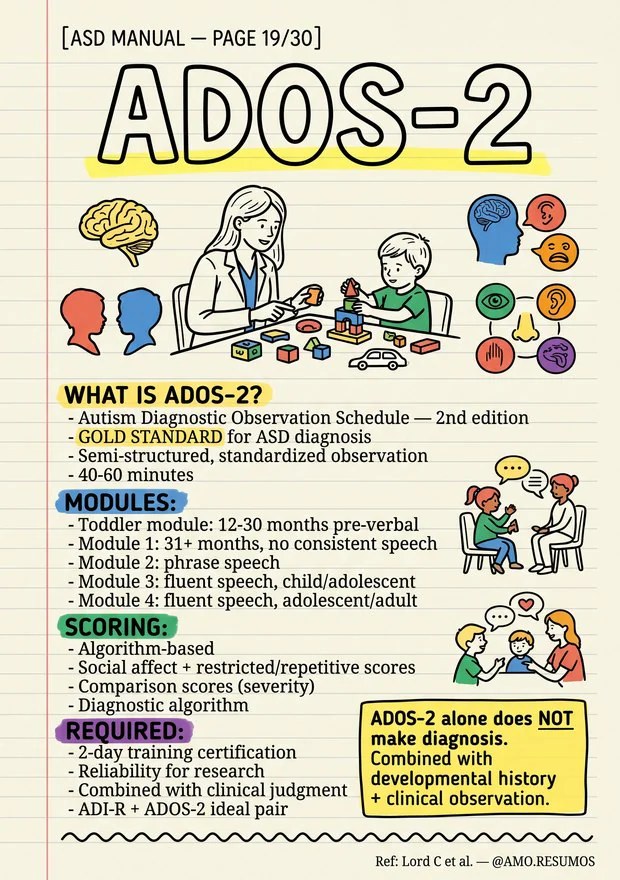
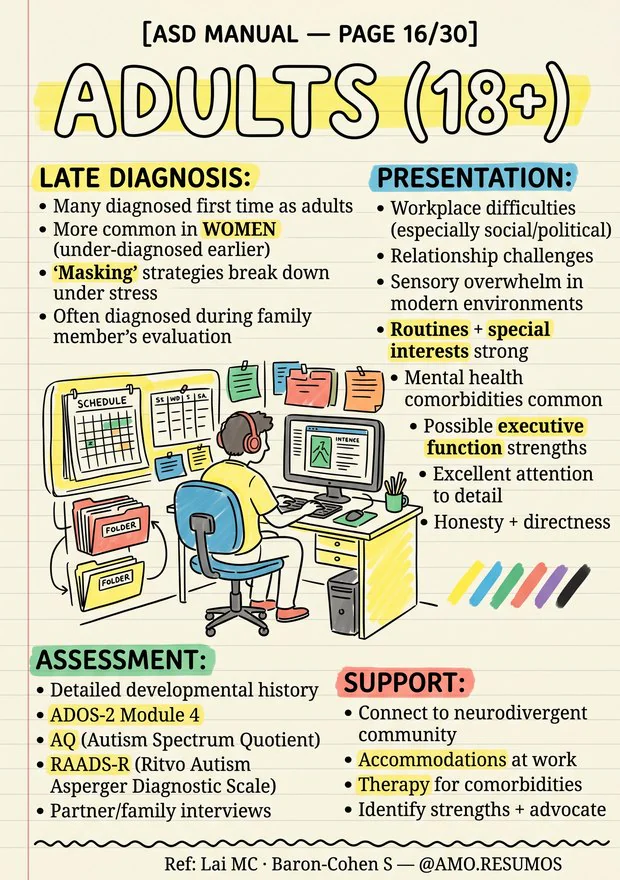
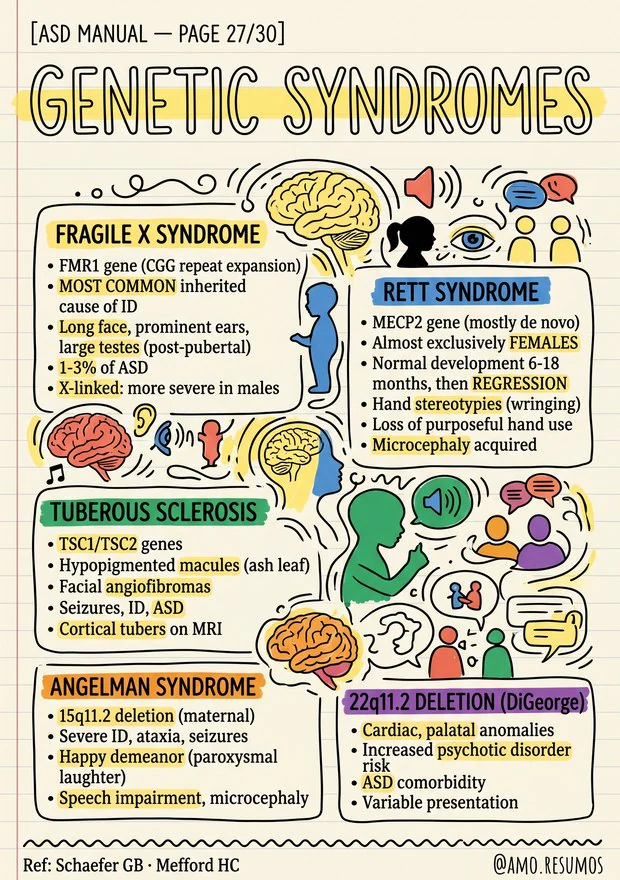
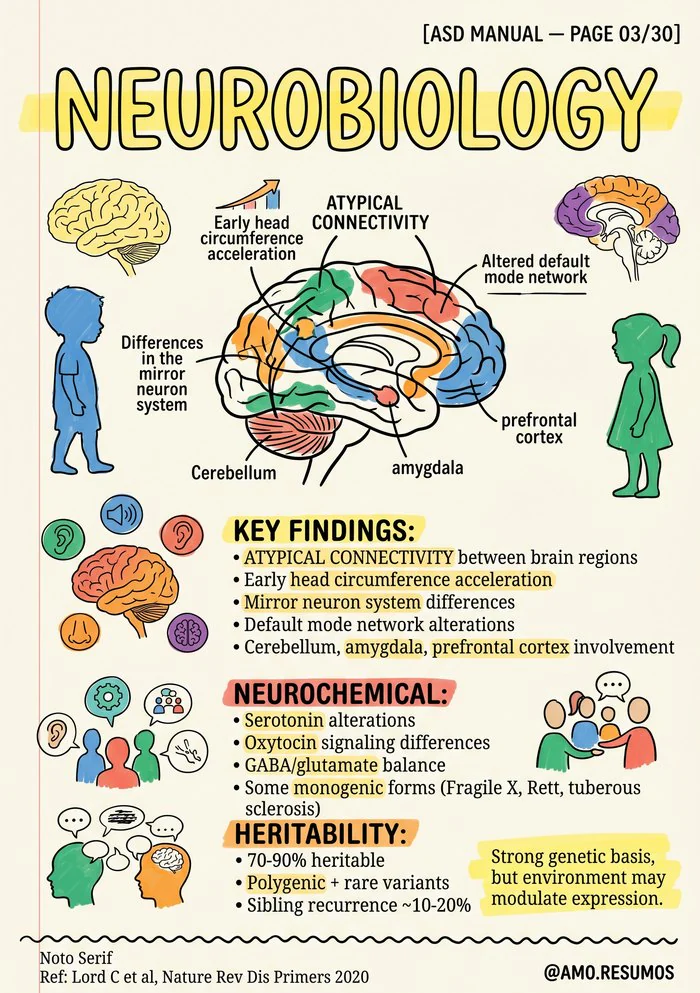
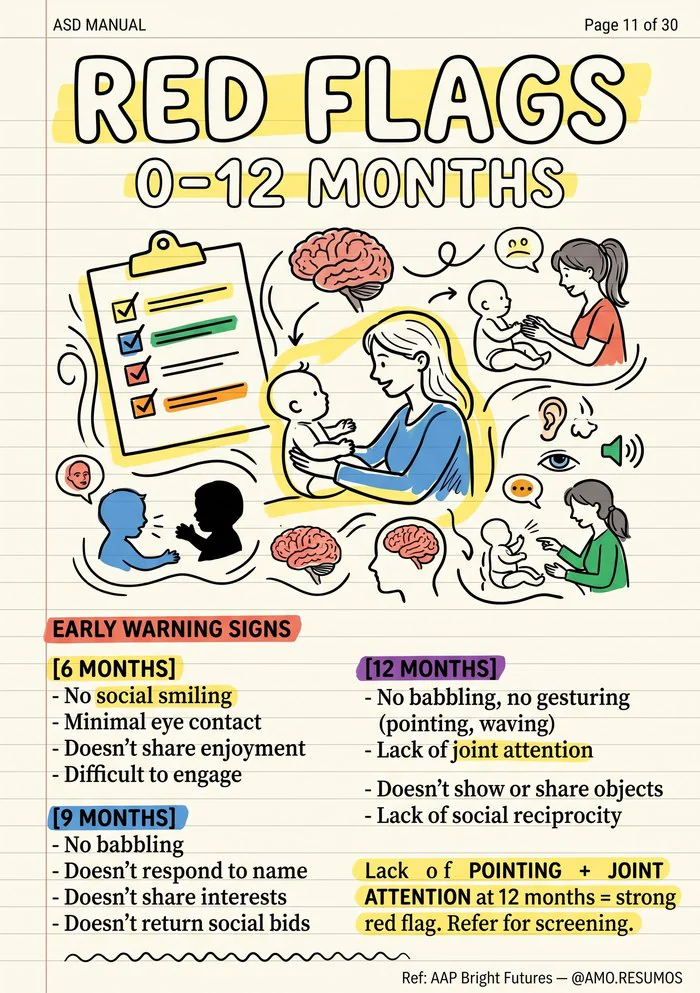
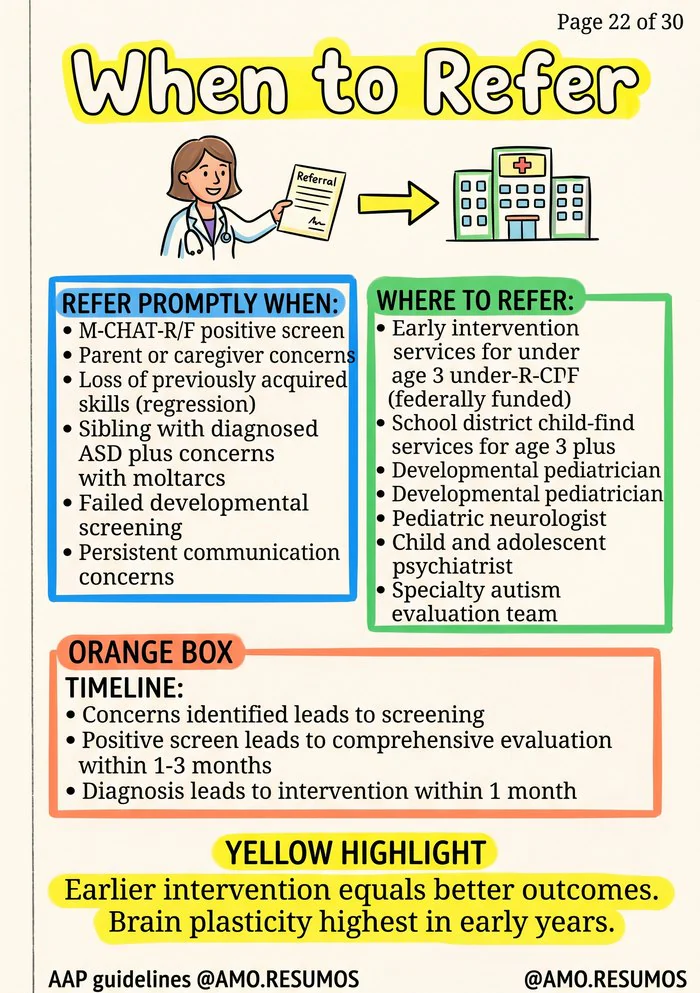
The child is in front of you. Is it autism?
Check the ones you have already lived through:
- A mother said "he doesn't look at me" and you could not tell a red flag from normal variation
- You applied the M-CHAT, got a medium-risk score, and did not know what to do with it
- You suspected autism but could not decide between referring now and reviewing in six months
- A verbal, well-behaved girl came in and nobody had ever raised the question about her
- You could not separate autism from language disorder, intellectual disability or social anxiety
- You had to give the news to a family and froze on how to actually say it
This illustrated manual is for you.
Autism, taught the way you actually evaluate it
Keep the Autism Spectrum Disorder Guide in your pocket and stop guessing at the evaluation. You look it up the moment you need it, and you walk into every consultation with more confidence.
Everything you will find inside the manual
30 illustrated chapters, in 7 parts. Click any of them to see the topics covered.
What autism actually is and what it is not, and why "spectrum" is the word that matters. How common it is and in whom. The neurobiology behind it, drawn out. And the myths against the evidence — the ones you will be asked about in the room.
Criterion A, the three social-communication items one by one. Criterion B, the four restricted and repetitive items including sensory differences. Criteria C, D and E. The three support levels, assigned separately for A and B. The specifiers. And the ICD-11 equivalent alongside.
Red flags in the first year, then from 12 to 24 months, where regression always means urgent referral. Then the same disorder as it presents in the preschool child, at school age, in adolescence, and in the adult — including late diagnosis, masking and why women are found so much later.
M-CHAT-R/F: what it is, when to apply it, how to score it and what the follow-up interview is for. The other screening instruments worth knowing. ADOS-2 module by module. ADI-R. The multidisciplinary evaluation and who does what in it. And the page that answers when to refer.
Autism against intellectual disability, language disorder and ADHD, each with the feature that settles it. Against OCD and anxiety. Then the psychiatric comorbidities and the medical ones — epilepsy, sleep, gastrointestinal — that change what you have to look for.
The syndromes to recognise — Fragile X, Rett, tuberous sclerosis, Angelman, 22q11.2 deletion — with the features that flag each one. And how the genetic workup is actually ordered and interpreted.
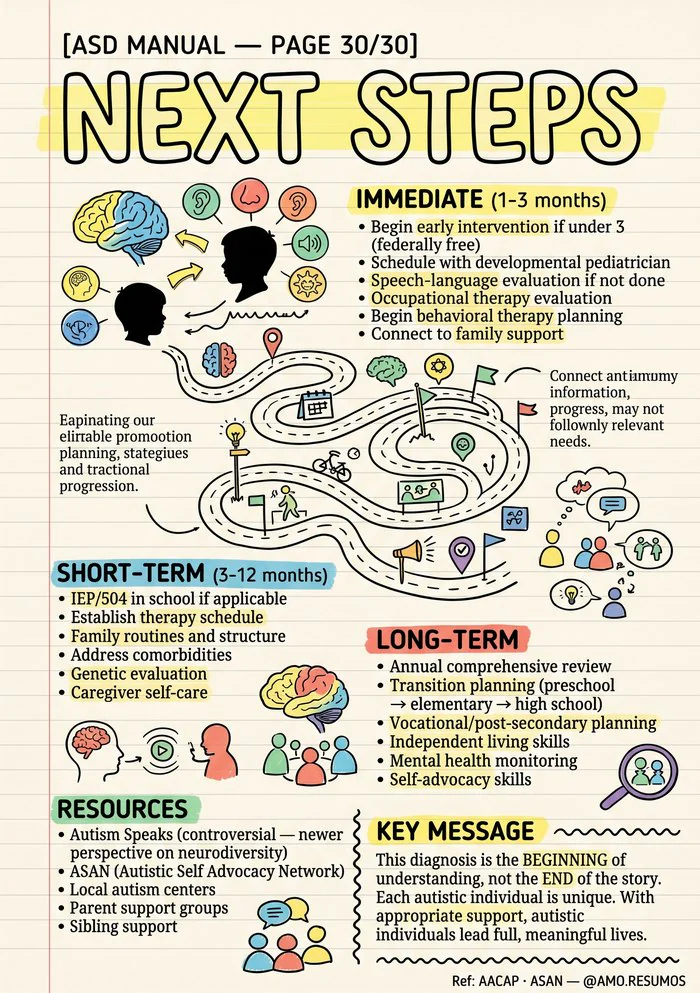
How to give the diagnosis to a family, in words that help rather than frighten. Then the next steps: early intervention, the school plan, what to hand them before they leave and when to see them again.
The sources behind the manual, listed at the end so you can go deeper on any page.
Get your Autism Spectrum Disorder Guide
- Immediate access to the manual
- High-resolution PDF, 30 illustrated chapters
- Read on your phone, tablet or computer
- Print it yourself if you want it on paper
- Lifetime access to the content
- All 7 parts, from neurobiology to follow-up
- 7-day guarantee
7-day guarantee
If within 7 days you feel the manual did not help you, we refund 100% of your investment. No questions asked.
Frequently asked questions
No. It starts at the very beginning, with what autism is, how common it is and what the brain is doing, then walks through the diagnostic criteria one by one before moving on to screening, referral and follow-up.
The DSM-5-TR criteria, item by item, with the three support levels and the ICD-11 equivalent shown alongside so you can work with either system.
Both. There is a full section on recognition by age, from red flags in the first year through preschool, school age and adolescence to adults, including late diagnosis and masking.
It explains what ADOS-2 and ADI-R are, what each module covers, how scoring works and where they fit in the evaluation — so you know when to request one and how to read the report. Administering ADOS-2 yourself requires formal certification, which the manual states clearly.
As soon as your payment is confirmed, the download link is sent to your email. It is a high-resolution PDF you can read on your phone, tablet or computer, or print yourself if you like keeping it on paper.
Medical students on rotation, interns, residents, pediatricians and general practitioners — anyone who has to recognise autism in a real consultation and wants a routine to fall back on.
The digital edition is yours for life. Download it once and use it whenever you need.
You have 7 days after purchase to review the material. If it is not for you, we refund 100% of what you paid, no questions asked.